Inside the school
A school born from the mothers’ request
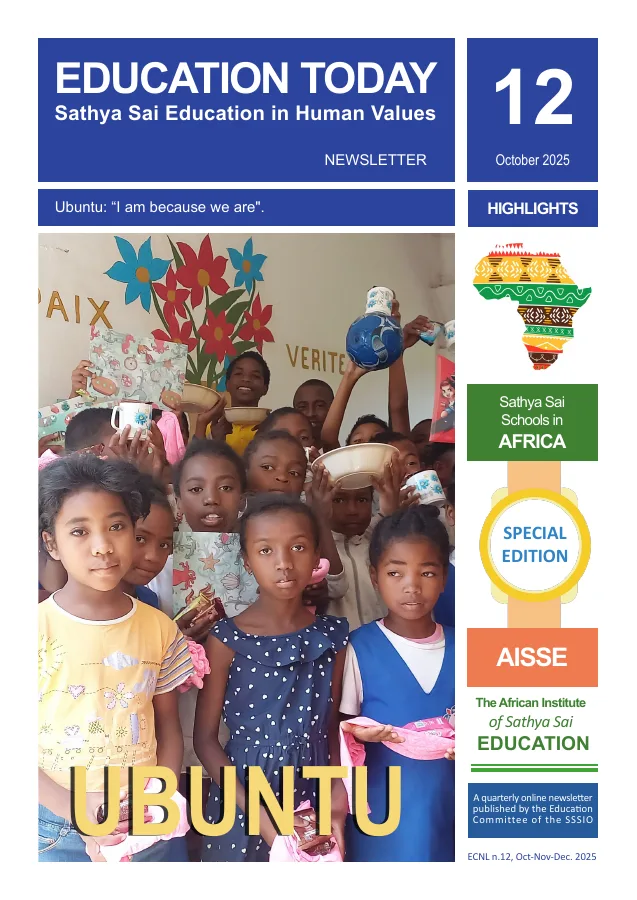
Single mothers asked the Sathya Sai Centre for a safe place where their children could learn while they worked. Since 2011, that request has grown into a school where children wash, eat, learn and are loved, and where care continues beyond the classroom gate.
Help this school growIt began with the mothers’ request
Single mothers coming to the Sathya Sai Centre for food kept voicing the same hope: if their children had a safe place to learn, they could go to work instead of having to beg. Kindergartens in the city were too expensive, while primary school began only at age six.
The Centre opened a free kindergarten in November 2011; the school dates its launch to 23 November. It then grew with the first class, one year at a time, into a free primary school for Grades 1–5. In May 2026 the school had 138 children; by July 2026 it counted 150.
The school stands in one of the poorest parts of the city. Many of its children have one parent or none, and are raised by grandmothers, aunts, cousins or older siblings. Places are few, so the school gives priority to children who have lost one or both parents.
A day that begins with care
Lessons start at 7.45, but a teacher arrives at seven for children whose parents leave early for work. Some children have no water at home, so they can wash and brush their teeth with supplies the school provides.
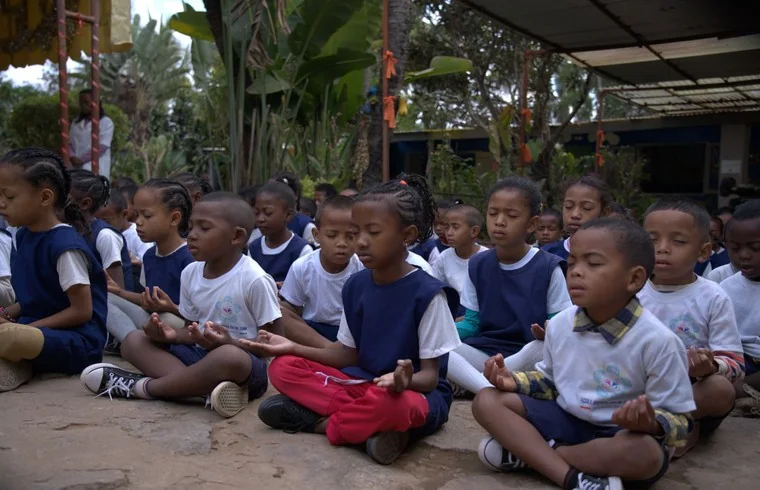
Prayer, devotional singing called bhajans, assembly, a human values lesson and quiet meditation lead into the school day. A morning snack, vegetarian lunch, lessons, books and materials are free, and the school also helps with clothing.
After classes end at 3.15, teachers often stay to help a child who fell behind. Children clean their classrooms in rotation, and each class tends a garden plot.
The people behind the school
Brought here by love
Monique, Meera and Krishna describe a school sustained by love, service and faith.
Monique
Principal · twelve years at the school, as of 2026
“I believe I came there by the hand of God. It is He who brought me there.”
Spoken in French; translated · 26 May 2026
Monique lives near the school. Twelve years ago a friend brought her to the Centre while she was looking for work. She began as a teacher, continued her studies with the school’s support, and now leads the school, teaches its final-year class and guides human values lessons herself, from books left by two teachers who trained in Mauritius. What gets her up each morning, she says, is helping children who are poor and giving them good futures. She says Baba and the school have helped her raise her own children and grow herself.
Who is Sai Baba to Monique?
“Simple. He is God.”
Spoken in French; translated · 26 May 2026Meera
Operational lead · plans the school week with the staff
“She has always been there for me when I work, even in difficulty.”
Monique, about Meera (“madame”) · translated from French by Meera · 26 May 2026
Meera grew up in a Sai family in Mauritius; it was after she began working, around 1995, that Sathya Sai Baba’s teachings became her own. She moved to Madagascar in 2001. She plans with staff, prepares the annual budget, and checks the accounts closely. When staff face difficulties at home, she says, “they know they can rely on us.” She hopes to see the school self-reliant, on land of its own.
Who is Sai Baba to Meera?
“Mostly, I don’t have to explain. Because our works speak for us.”
26 May 2026Krishna
Sai Centre member · looks after the school’s finances
“And then I started believing in Swami.”
5 July 2026
Krishna first heard of Sai Baba through a film about Shirdi Sai Baba, in 1978 as he remembers it. When he met Meera she was already a devotee, and he did not believe as she did. He traces his own belief to a moment years later, during his professional exams, after he had read a book about Sathya Sai Baba.
Krishna then became actively involved in service in Mauritius. In Madagascar he helps steward the school’s finances and speaks of the work simply: “We only instruments,” and, “With Swami, there is no retirement.”
Sri Sathya Sai Baba was an Indian spiritual teacher whose message of love and service inspired people around the world. His teachings centre on five human values (truth, right conduct, peace, love and non-violence), and every Sathya Sai school is built on them. Read our story
Children who change, and come back
Monique hears from parents that human values education travels home. She recalled a child who had used bad language and begun getting into trouble, but changed so much at school that the child began helping the family to behave well too.
Parents tell Monique how lucky they feel: in public schools nearby, a class can hold 40 to 45 children. She said the lower secondary schools receiving their pupils describe them as well brought up, with marks that compare well with fee-paying private-school pupils. In July 2026, Krishna reported that all 18 pupils in the latest end-of-primary exam had passed, making three consecutive years of full passes.
Care continues after Grade 5: the school helps with secondary-school fees for pupils who pass well. Twelve former pupils return each Sunday for bhajans. Former pupils also help at festivals, and one former art-prize winner looks after younger children during Sunday service.
Love that reaches past the gate
The kitchen serves the wider community too. Each Wednesday, 80 to 100 older neighbours come for lunch, and most of them have grandchildren at the school. On Sundays, after bhajans, 250 to 300 local children receive a free meal, rising to about 500 on special days.
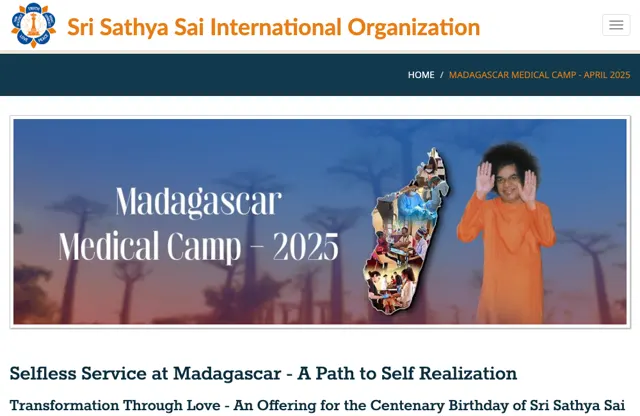
When a grandmother could not feed a child at weekends, the school sent rice home. The Centre’s clinic serves the whole area and gives schoolchildren priority. Regular health care includes check-ups and medicines; an April 2025 workshop brought children, parents and teachers together around responsible eating and self-awareness. Older pupils carried water and guided visitors at the city’s 2025 medical camp.
The school planted 1,700 trees across 2023 and 2024, then another 1,000 on 23 February 2025. Children and teachers garden together every Friday, using and sharing what they grow. A pupil earned second prize in the 2024 Zonal Art Competition, and two received first-class honours in the 2025 African Institute of Sathya Sai Education arts competition.
A new place to play
The small grounds once had nowhere for lunchtime play. Extra support created a fenced place to swing, slide and play together. On 29 September 2026, the school reported that the playground was complete and in use.
What support has helped change
On 29 September 2026, the school reported its renovation 90% complete: furniture, floors, windows, doors and painting were finished, while repairs to the corrugated roofs were still pending.
An earlier renovation repaired roofs and added toilets where the school had only one.
Too sad to leave them behind
A classroom is meant for about 20 children, but the youngest classes hold more because the waiting list is long and, as Krishna put it, “sometimes it’s so sad to leave them behind.”
The school rents its land and can build only the basics. Meera and Monique share a hope: land of the school’s own. Krishna names the same dream: better classrooms, room for more children and, eventually, secondary education. They also hope to restore computer learning after donated laptops wore out.
Krishna said the school has sustained its expenses for more than fourteen years “by the grace of Swami.” A regular sponsor, the Sai Centre and visitors who see the work help cover teachers, books and daily meals; additional gifts fund improvements.