Inside the school
Where boys learn they are loved
In Maasai country in Kajiado County, Kisaju has grown from 32 boys in 2001 to 432 in October 2026. What transformed the boys who once came from Nairobi's streets, its principal says, he would sum up in one word: love.
Help this school growThirty-two boys, and room to grow
Kisaju opened in January 2001 with 32 boys in Grades 1 and 2. It grew with them, adding a class each year until all eight primary grades were offered in 2007. The school dates its foundation stone to 1999.
An auditorium opened on 25 November 2012 for school activities and community Educare programmes. Secondary education followed in 2018. The school’s year-end report records receiving an SSSIO certificate of accreditation that September, a milestone in its history.
By 16 October 2026, Kisaju reported 432 learners and 23 teachers across preschool, primary, junior and senior secondary. Boarding and day pupils belong to the same school community.
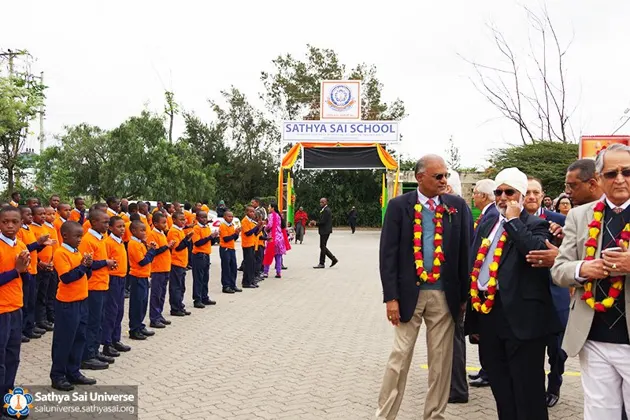
The school stands in Maasai country, where most families keep livestock and the rains are unreliable; in October 2026 the area had gone three to five months without rain. Each morning the school's bus, minibus and van collect many of the day pupils from their homes across a wide area.
A day shared at school
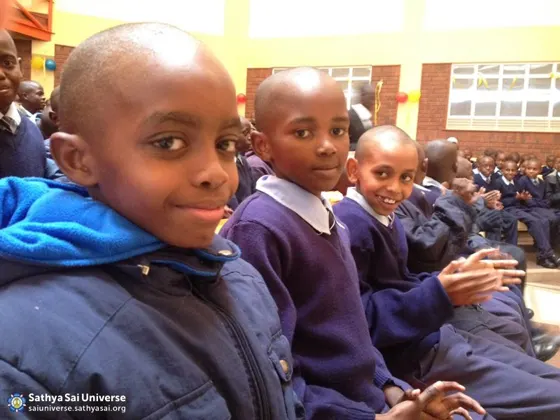
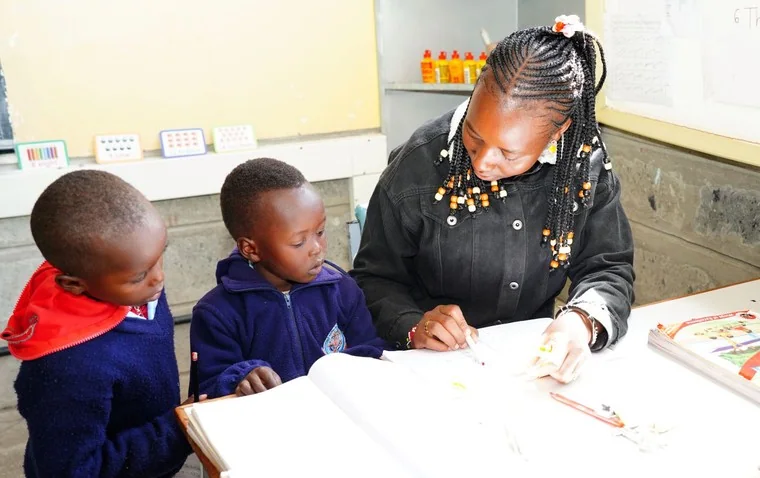
For the youngest boarders, some only six or seven, a matron shows them “motherly love”, the principal says. She washes their clothes, gets them ready in the morning and makes sure they reach breakfast. A dorm father sleeps in the older boys' dormitory. Lessons, an afternoon activity and evening study until nine give the day its rhythm. Friday is for sports, and by October 2026 skating had joined the week. Weekends make room for dancing and sometimes a Saturday film.
Everyone eats the same vegetarian food, staff included, from the same dining hall. Boarders have four meals a day; day pupils join the mid-morning porridge and lunch. Parents hear about the vegetarian menu before their sons start. “I can assure you no one has ever complained,” the principal says. A school nurse and clinic provide care, with hospital referrals when needed.
Kisaju is a non-denominational boys’ school. Christians, Muslims and Hindus share one afternoon a week to worship, each in their own way, while all learn to practise truth, right conduct, peace, love and non-violence together.
Love comes first
In earlier years, Kisaju took in boys from the streets and slums of Nairobi on scholarships. Some had no parents. Principal Geoffrey Cheruiyot remembers that some “have never seen parental love”, and that counselling had to come before any talk of academics.
What reached them first, he says, was people who listened and food that came every day. On the streets, “you get food by luck.” At Kisaju there were four meals a day, and he believes that steady feeding was what first softened their hearts. Teachers told them, “we are all created in the image and likeness of God, so we are all like God, your friend is like God, why should you fight?”
He does not pretend it always worked. “Transformation is not easy,” he says, and some boys went back unchanged. But many changed. One boy from the slums went through the school with a sponsor’s help and, the principal says, is now a doctor after five years of medical training. Others have become lawyers, administrators and a musician.
Fewer boys come from the streets now. As of October 2026, orphans study free, and boys from families in hardship pay reduced fees.
The people behind the school
Why they serve
Geoffrey, Kumar and David spoke with the Zone 9 Schools Committee on 16 October 2026.
G.K. (Geoffrey) Cheruiyot
Principal · first joined the school in 2007
“These values changed my life. These values changed my family.”
16 October 2026
Geoffrey comes from a neighbouring county. A friend already working at Kisaju introduced him in 2007, when the school needed an experienced teacher for its first Grade 8 class sitting the national exam. What he found, he says, was “an environment of love.”
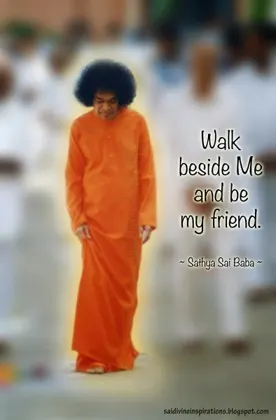
A Christian, he wondered what Sathya Sai Baba, the school's founder, meant by love: “I know the love that is in the Bible. I'm a Christian. So what is this love that the founder is talking about?” He read the books, and they changed him; his family noticed the difference. After about five years he went to South Sudan, newly out of war, to train teachers. Alongside lesson plans he spoke of peace and love, “very good news to them because they had never seen peace for a long time.” After a year or two he came back to Kisaju.
The hardest part of leading, he says, is balancing understanding with strictness. With young teachers fresh from college he would rather mentor than fire, to “be an administrator who will mold them and mentor them.” He has never been to Puttaparthi, Sathya Sai Baba's home in India: “If a door opens, I'll be the happiest.”
Who is Sai Baba to G.K.?
“Sathya Sai Baba did not come to the world to look for followers. He came to the world with a message that is universal and agreeable in all the religions.”
How he explains Sathya Sai Baba to new parents, adding that, in Baba's own words, practising these values makes a Christian a better Christian and a Muslim a better Muslim · 16 October 2026Kumar
Administrator
“They always say it's very good school with values.”
On former pupils who now bring their own sons to Kisaju · 16 October 2026
Kumar looks after the practical side of school life: the kitchen, the farm's daily vegetables, the classrooms and the running costs. He watches personally that no food is wasted, and the little that is left goes to the farm dogs.
David Sapuki
Liaison officer · new to the school in October 2026
“the opportunity to contribute to learners' academic development, character formation, and human values.”
What inspires him at Kisaju · 16 October 2026
David is still learning how the school runs. Watching the morning devotion sessions, he says, helped him appreciate how Kisaju brings human values into the children's daily experience.
Sri Sathya Sai Baba was an Indian spiritual teacher whose message of love and service inspired people around the world. His teachings centre on five human values (truth, right conduct, peace, love and non-violence), and every Sathya Sai school is built on them. Read our story
Values that travel home
On Tuesday and Thursday mornings, before lessons, teachers lead devotion sessions, grouping pupils by level around a value and sub-value for the week and a quote of the week. The approach is Sathya Sai Education in Human Values, or SSEHV, which the principal calls “the backbone of our institution”.
He says Kajiado County knows the school's values work, and he sees Kenya’s new curriculum, which now asks all teachers to instil values, as “borrowing a leaf” from schools like Kisaju, though “the way we do it is more in-depth.”
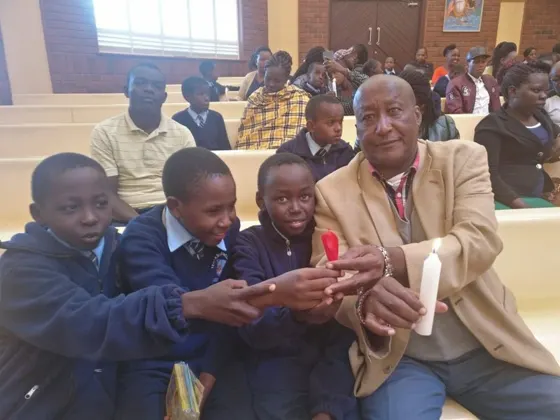
Parents are part of that work. At Parents’ Reverence Day on 16 June 2018, boarding pupils welcomed parents and guardians with handwritten letters and appreciation cards. Families shared food with the boys. A parent orientation workshop followed on 24 February 2025.
The HOPE programme, Honour Our Parents Everyday, carries these ideas into home life. The school’s summary of families’ feedback after the December 2018 holidays describes pupils helping with chores, caring for younger siblings and supporting older people.
Teachers learning together
Kisaju hires government-trained teachers after an intensive interview that looks for the right qualifications and the right attitude. New teachers are inducted into the school's values before they take a class, then continue with online training from the African Institute of Sathya Sai Education and ongoing support. Teachers who inspire their pupils, the principal says, are kept.
Most teachers live on campus and eat with the boys. Several teachers have served five years or more, and some kitchen and cleaning staff more than ten (October 2026).
Kisaju also shares what it has learned. A workshop reported in 2015 brought 67 delegates from 14 schools together, and in April 2017 the school hosted an introductory SSEHV course for teachers from Kisaju, Uthiru and Sai Seva School Kawangware, led by South African Institute of Sathya Sai Education facilitators.
From the farm to the table
Spinach, kale, onions, bananas, lemons and green maize connect the farm to the kitchen. Sai Farm supplied 1,510 kg of produce during the 2024 reporting period, and pupils learn farming methods there. By October 2026 the farm was supplying the kitchen's vegetables every day, alongside rice, beans, flour and milk bought elsewhere. More land behind it lay uncultivated for lack of water.
The harvest has also been shared beyond the school. On 20 October 2013, pupils, an alumnus and teachers took food and supplies, including school-grown vegetables, to Bethsaida Home. Growing food and sharing it became part of the same act of care. Tree planting remained part of the school’s activities in 2025.
Learning opens doors
Physics, chemistry and biology laboratories, with a lab technician, support practical lessons. At the government's request, Kisaju has also hosted private Form 4 candidates, adults returning to finish their education, in its labs. In October 2026, senior classes spanned Grade 10 in the new curriculum and Forms 3 and 4 in the outgoing system.
Outside the classroom, the 2025 school programme included museums, the Giraffe Centre, Mamba Village, Nairobi National Park and the National Assembly. In October 2025, 17 Pre-Primary 2 children graduated and moved to Grade 1.
Service becomes a habit
On 16 May 2025, pupils, teachers and parents walked 10 km for human values, sharing messages along the route and at the local shopping centre. Later in 2025, celebrations honouring teachers in July and the centenary celebrations in November also brought food-hamper service to the wider community.
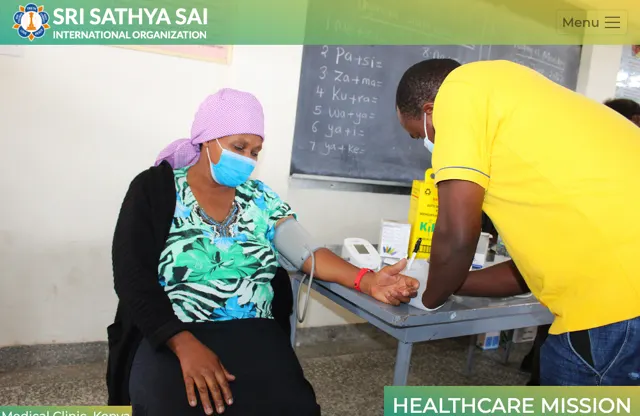
The school has long welcomed neighbours for practical help. A medical and eye camp on 30 July 2022 served around 200 people from surrounding villages, with food distributed to nearly 180.
Care has sometimes taken an unexpected form. The school’s July 2010 newsletter recalls pupils finding a newborn gazelle on the grounds and feeding it for two weeks before the school handed it to Kenya Wildlife Service personnel.
Austin carries it forward
When Austin Oduor returned to speak at the 2024 international conference in Nairobi, he recognised teachers who had taught him as a young boy at Kisaju. Community service at school had become a habit he continued through high school and university.
Austin thanked Sathya Sai Baba, whom he calls Swami, for the love and opportunity to study at Kisaju. He linked that gratitude to his own wish to serve. At the time, he was studying medicine and surgery at Maseno University and hoped to specialise in surgery.
His story is one example of a wider connection. In October 2026 the school said former pupils return to encourage today’s boys, and some now send their own sons to Kisaju.
What the school needs next
Fees at Kisaju are kept low for families who sometimes lose livestock in drought. A donated 33-seater minibus is part of the school's transport, and new Grade 10 books had been bought, though boys were still sharing them and the library needed more and newer books.
In October 2026 the school named two urgent needs. A fire on neighbouring land burned the plastic poles of its boundary fence; it hopes to rebuild with concrete poles, which last longer. And with the water table believed to have dropped in the drought, it had been buying water: it hopes to have its two boreholes assessed for deepening, or a new one drilled.
Further on, the school hopes for a swimming pool; swimming is part of the new curriculum, and boys have been travelling to a resort pool for practice. The administrator also asked for help, when possible, to refurbish old digital boards and the computer lab and to renew the school’s security cameras. Gifts towards these priorities can be directed through the Zone 9 Schools Committee.